by Paul Flavell, Tower Captain
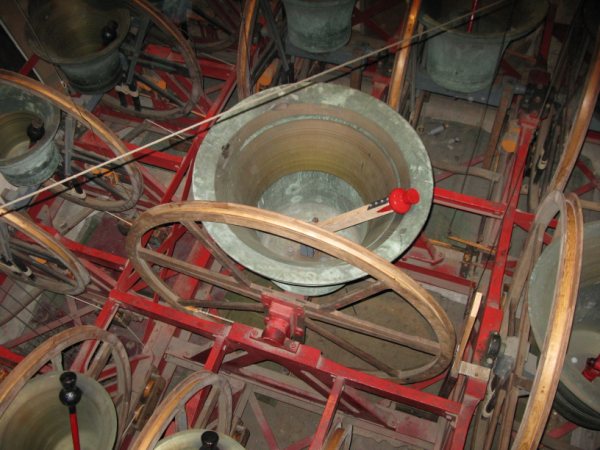
The bells of All Saints were all cast at various times by the Whitechapel Bell Foundry, and two of the bells (8 and 9) are celebrating their 200th
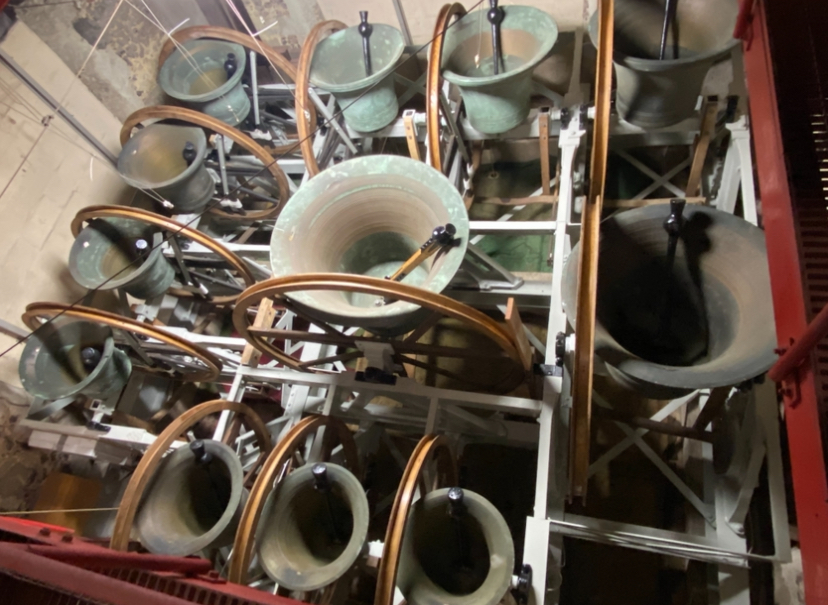
birthday in 2026. The other bells date from 1879, 1936 and 1972, but together they form a fine harmonious ring with clarity of sound in the ringing chamber which makes them attractive for ringing complex peals. They were most recently worked on in 1972 when they were rehung in a new metal frame and augmented to 12 with a tenor of 19cwt. The vicar at the time, the Rev John Martin, asked how many bells Cathedrals usually had – the answer was 12 – so he said – we must have 12 bells at Kingston! Since then the bells have rung thousands and thousands of times and have given sterling service.
However, Nicholson’s have been for some time recommending work on the bells, like rebushing the clappers, flushing out and regreasing the bearings. Some of the bell fittings dated from the 1930s renovation and were in urgent need of remedial work to make them fit for the next 50 years. Oh and the bell frame would certainly benefit from being cleaned down and repainted as well. But the cruncher was the discovery that one of the gudgeons on the 11th headstock had rusted loose and was in danger of failing in the near future.
After discussions with the church we got comparative quotations from
bell hanging companies, but decided on Nicholson’s as they currently
service the bells and we are always satisfied with their work. It made
sense to carry out all the work including painting the frame in one
project.
Quotation duly agreed and fundraising bolstered by a very generous bequest from Shirley Bolton in memory of Andrew, one of our most loved ringers, we placed the order with Nicholson’s. I must place my thanks now to everybody who has generously contributed to the project and we completed the fundraising ahead of schedule.
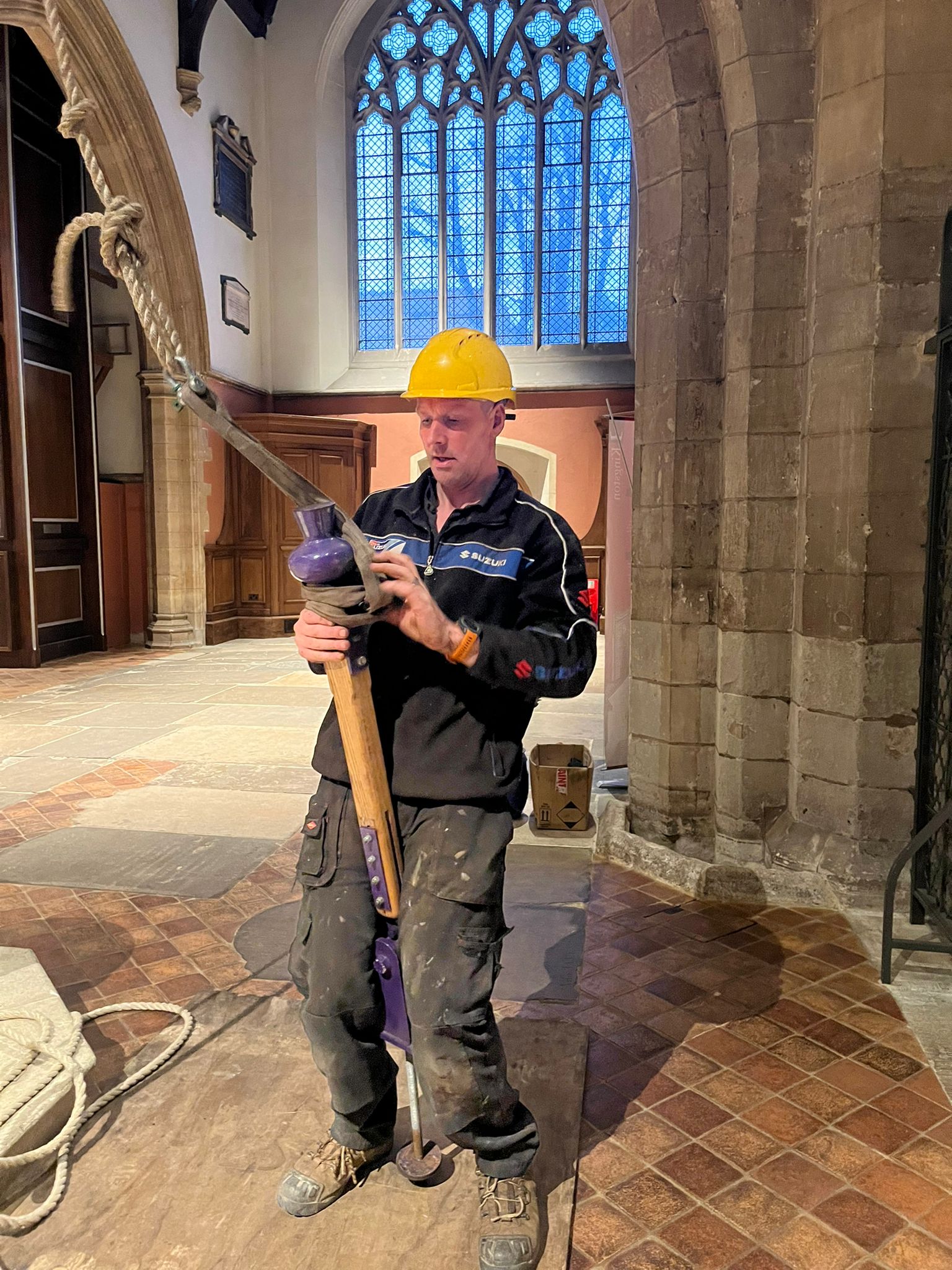
Chris and Martin from Nicholson’s started the work in February 2026 and was to take approximately 5 weeks. In the meantime the Kingston team rang at Thames Ditton and Cobham for services, and practised at All Hallows’ Twickenham and Hampton. We’re grateful to the ringers of these churches for their kind hospitality during this time.
Within a week, the bells were jacked up on blocks, all the clappers out and ropes and wheels and bearings off the bells. During the disassembly further issues were identified including a crack (hidden inside the headstock socket) in the tenor stay which would need to be replaced, a badly worn slider board and the need to replace bolts in the
tenor clapper with larger gauge bolts. All the clappers, bearings, tenor stay and 11th headstock were taken to Bridport for refurbishment. A further discovery during the dismantling work was that the crown staple bolts to the front three bells had worked loose in their respective staples. In the treble, the bolt had reached the point where it is a miracle it had never come adrift! Phew! All three staple bolts have now been attended to.
The 9th bell had a broken ‘twiddle pin’ (two bolts either side of the
headstock to adjust the clapper for odd struckness) which made the bel
very late at backstroke. Chris managed to drill out the old twiddle pin
and tap in a new thread and replace the pin so the bell now strikes
correctly.
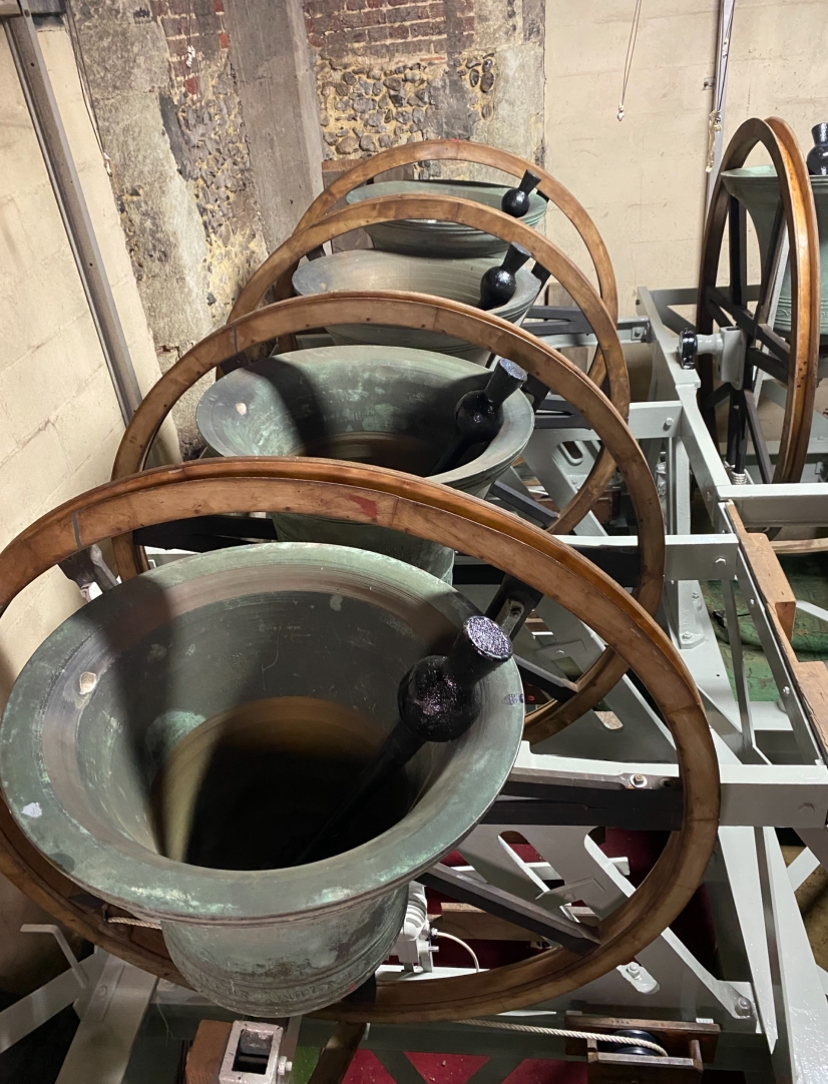
New oversize gudgeon pins were fitted to the 11th headstock. All the bearings were flushed out (removing some very old grease that was almost solid), cleaned thoroughly and regreased with modern engineering grease. The clappers were refaced and repainted in a hard wearing black hammerite type paint. The knobbly polyurethane paint on the clapper balls (to stop muffles slipping) was left in place but could probably do with being recoated soon.
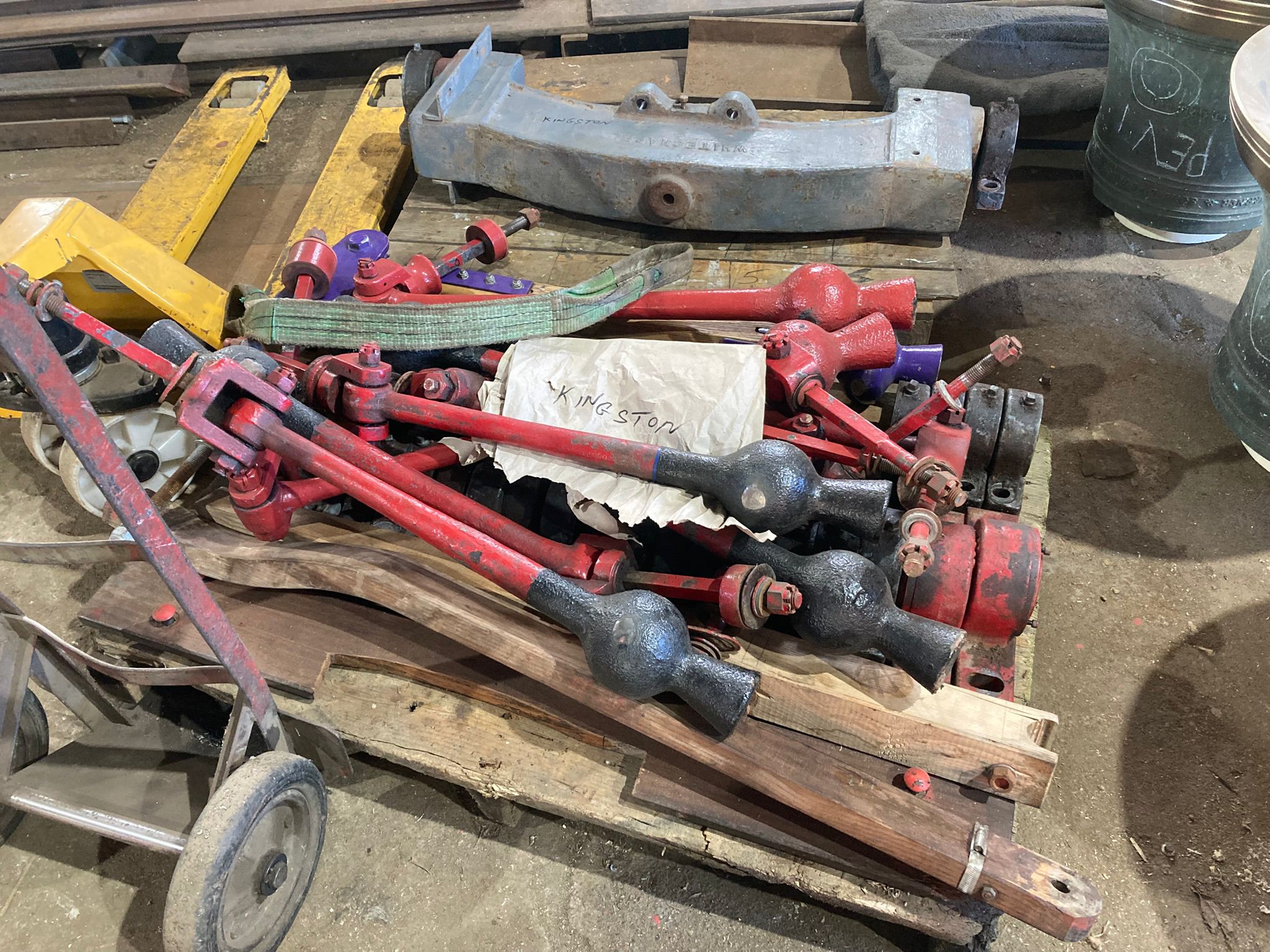
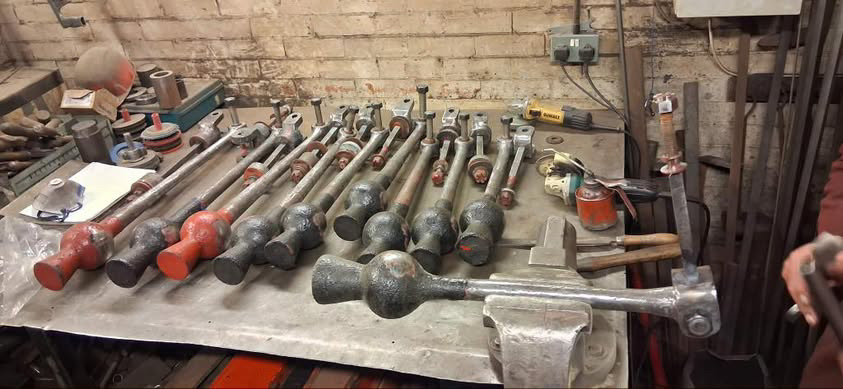
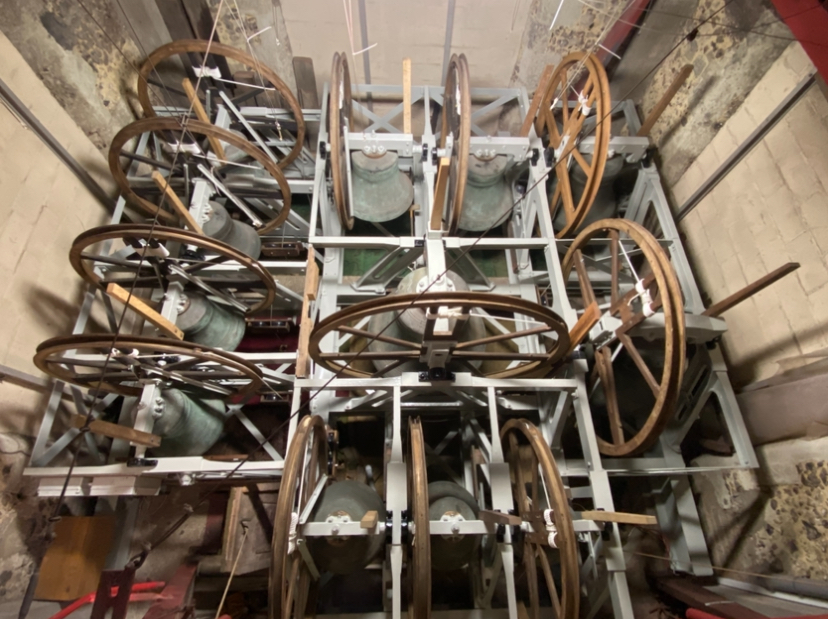
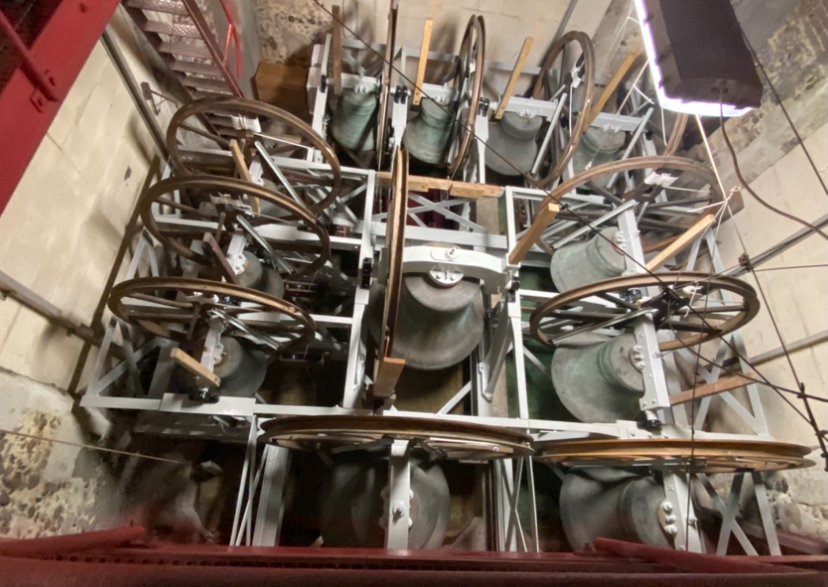
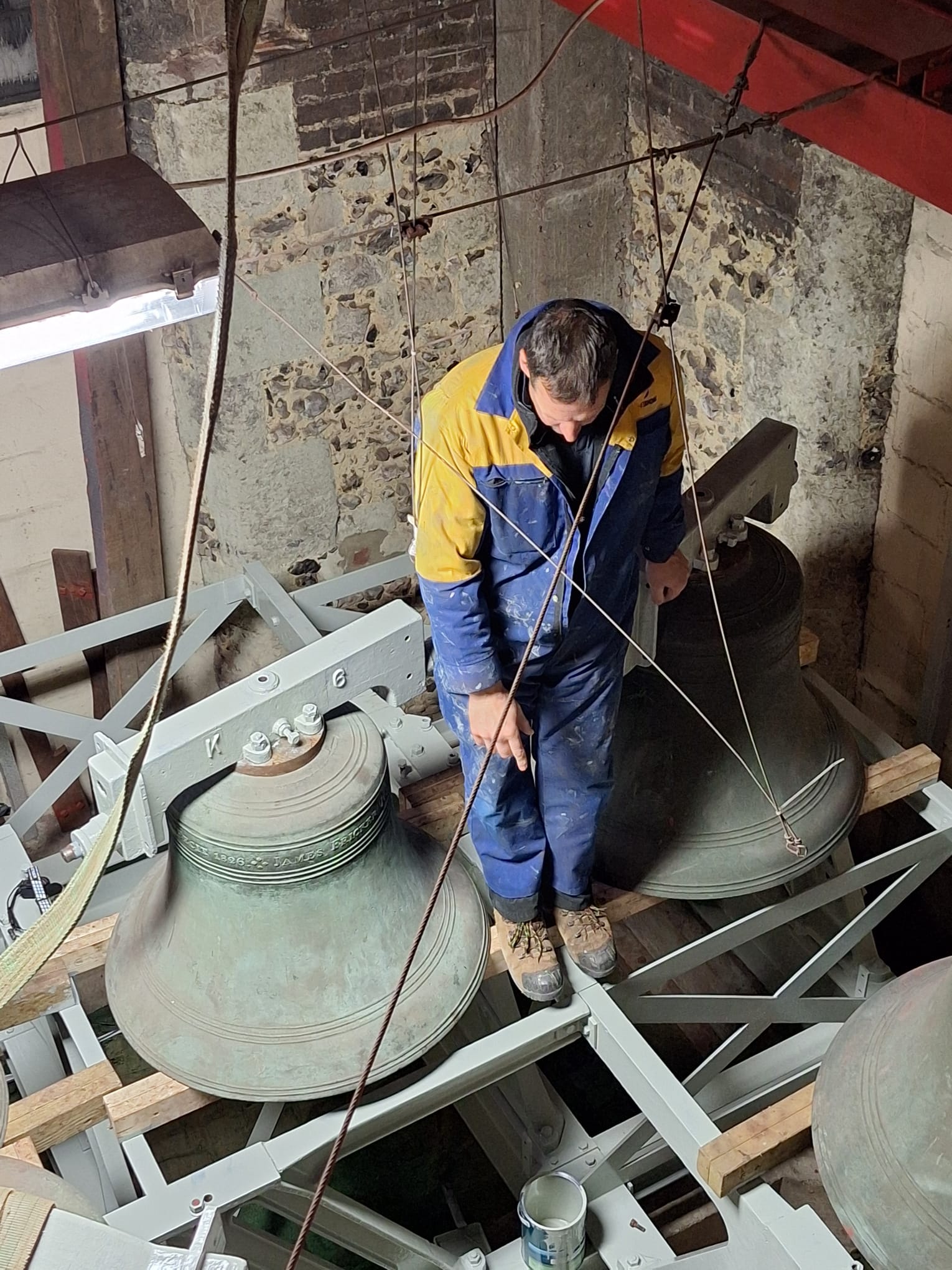
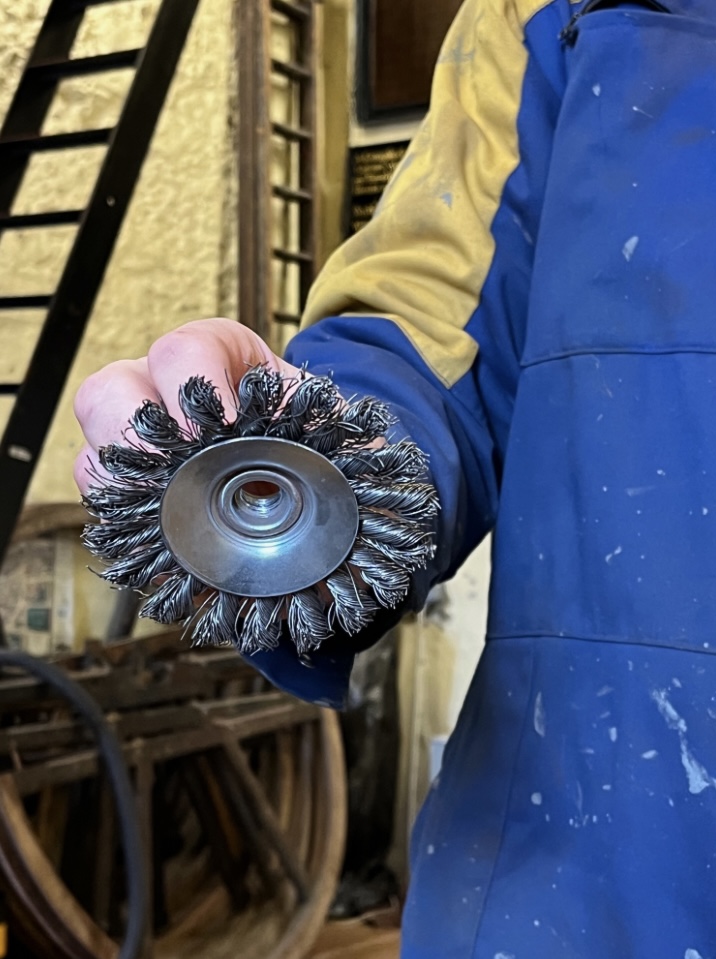
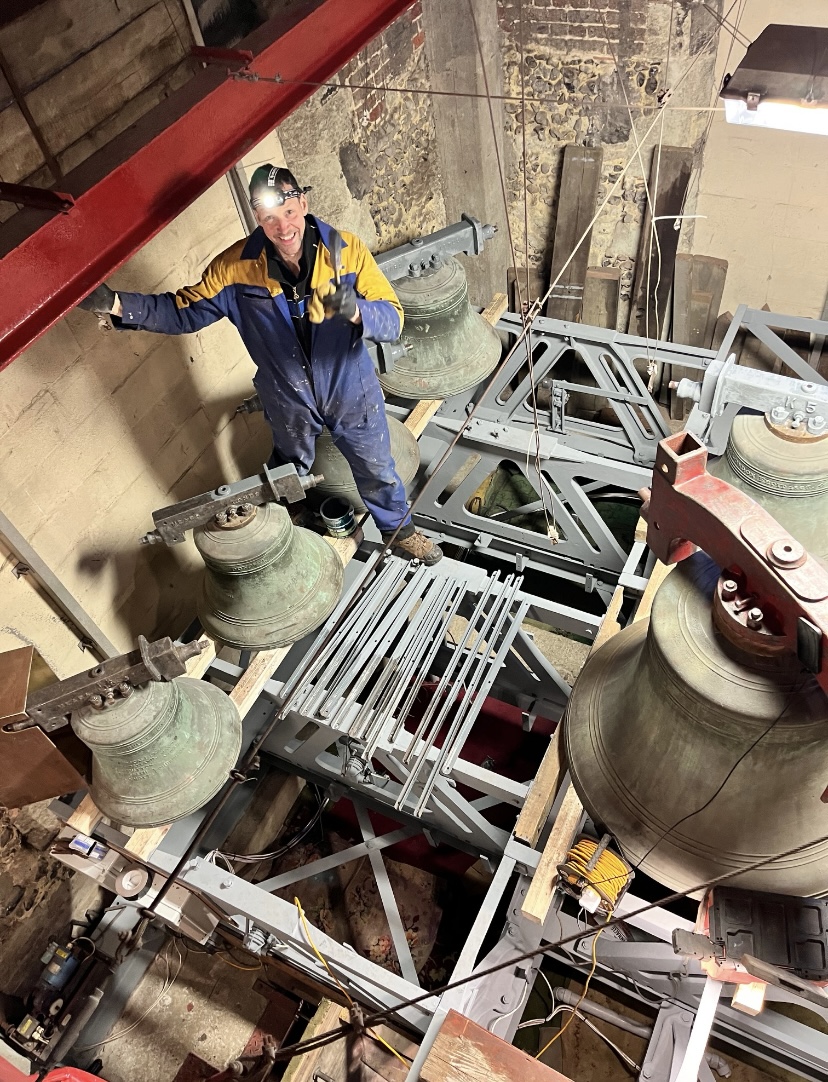
Whilst the fittings were away, Martin worked incredibly hard grinding old paint off the frame, cleaning all the dust from under the carpets and the carpets themselves. He removed nine bags of rubbish, mostly dust, paint flakes, rust, bricks and bits of wood and old wiring and general detritus! He was fortified by free coffee and cake from the church café – thank you Sarah!
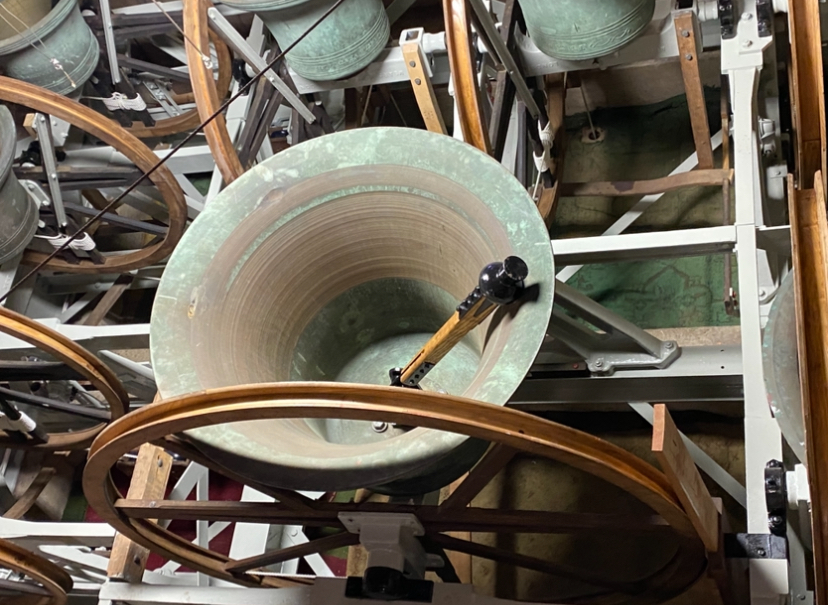
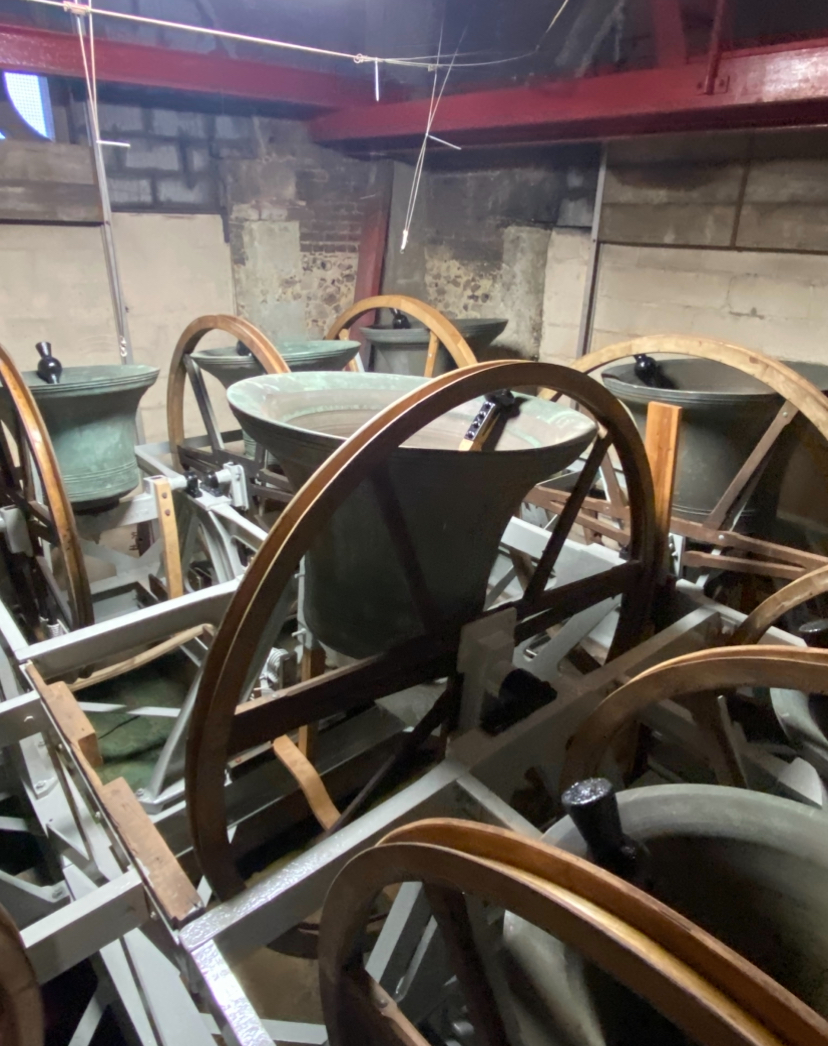
Martin spent several days applying a zinc-based primer paint (9 litres!) to the frame and headstocks. The wheels were coated in lignum-base preservative, apparently bat friendly. (I pointed out the only bat we’ve got is Bob who hangs from the spider). The final frame coat is a lighter grey enamel gloss paint (17.5 litres!). The new chiming hammers got a coat of paint too. The lighter grey makes the belfry lighter and helps when we are scrabbling underneath the bells to put muffles on.
We asked Nicholson’s to provide the invoices ahead of schedule so these could be paid and the church reclaim the VAT (over £5,000) under the Listed Places of Worship Scheme. We got the claims in just in time before the scheme was discontinued and were pleased these were successful.
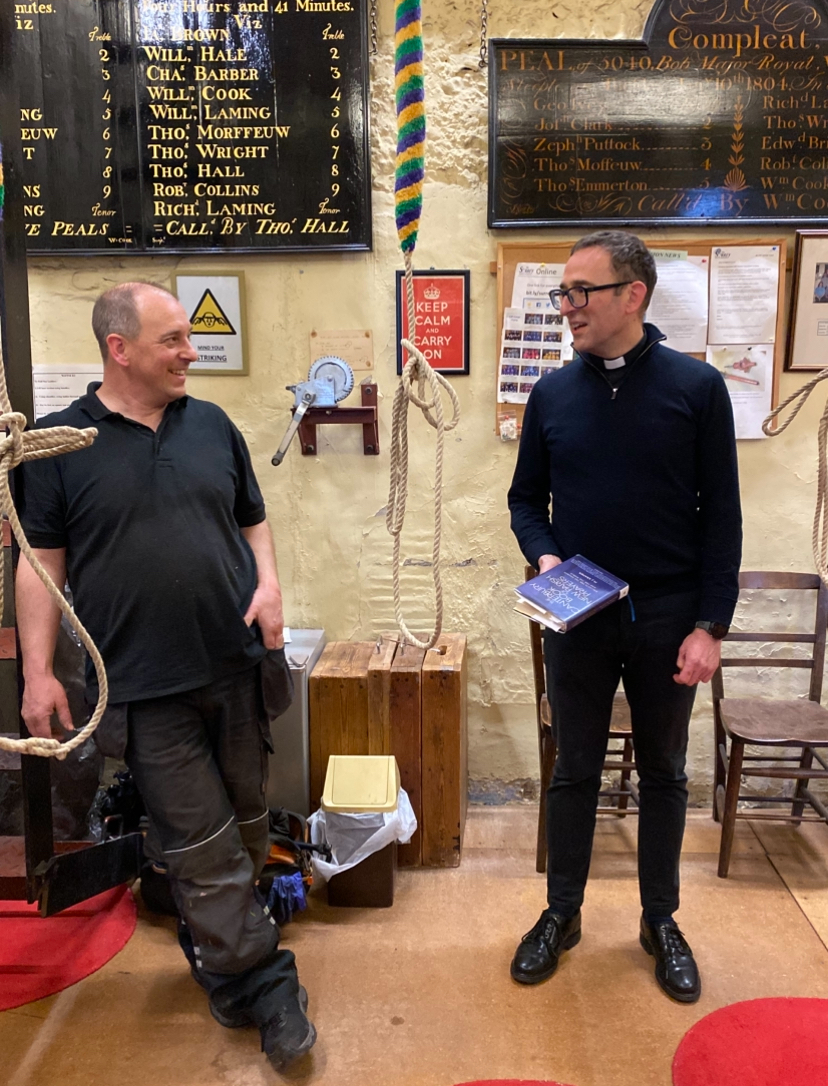
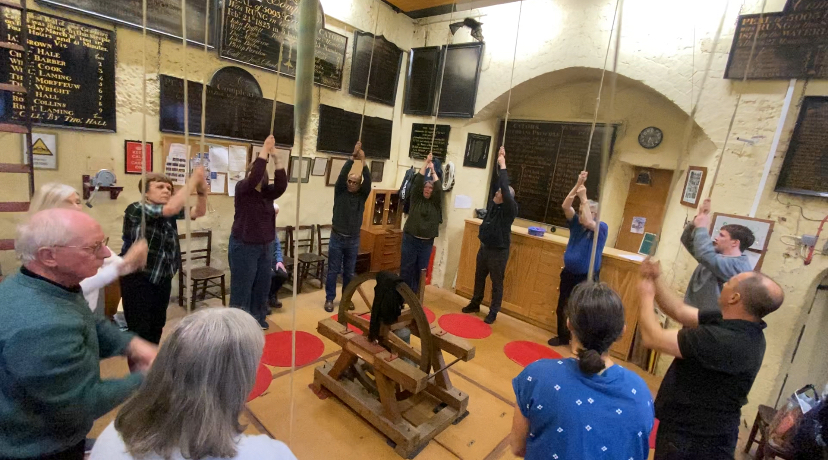
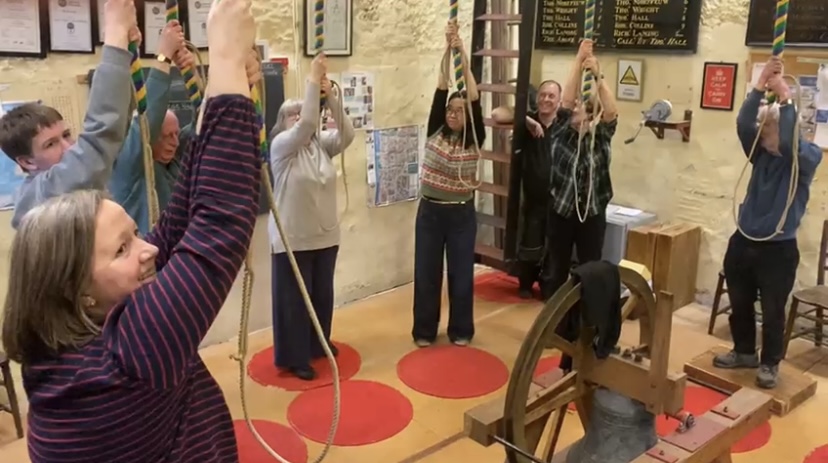
Reassembly commenced on 23 March and completed on 31 March. We welcomed our Vicar Joe to the try out on April 1 where he gave a prayer for the refurbished bells. We carried out a spring clean on April 4 and are ringing on Easter Sunday. The bells sound a little dull at the moment but will brighten as the new strike points on the clappers bed in. My fears that removing years of dust would make the bells much louder were unfounded! All the ringers are pleased with the job and we are delighted to be back home again.
We’d very much like to thank all our donors to the project, Nicholson’s
for their very professional and careful work, and the church and our
ringing team for their support for the project. The bells will be
rededicated at a service on Sunday 19 April.